Usable water head
The vertical drop from the water intake level to the turbine, after allowing for pipe losses.
 PNG Power SolutionsBackup power support
Small hydropower for PNG
A hydropower generator can provide long, quiet running power at the right site. But the generator rating alone does not tell us what the water can produce. We must check net head, minimum dry-season flow, pipe route, loads and site access.
First decision
Having a river or stream is only the beginning. A workable project needs enough usable fall and enough water during the driest period, plus a practical way to build and maintain the system.
The vertical drop from the water intake level to the turbine, after allowing for pipe losses.
Use the minimum reliable flow, not only the large wet-season flow seen after rain.
There must be a feasible intake, channel or pipe route, powerhouse position and safe return of water.
Landowner consent, downstream users, environmental effects, transport and maintenance access must be checked.
Two-minute preliminary check
This checker does not approve a project. It tells you whether to measure the site, compare another power source, or prepare data for a technical review.
Measure before choosing
More head can produce useful power from less water. Low-head sites normally need much more flow. Use measurements as a first estimate only; pipe losses and turbine efficiency reduce the final output.
For concentrated flow, time how many seconds it takes to fill a container. Flow in litres per second equals container litres divided by seconds.
For an open channel, estimate width × average depth × surface speed × 0.65. This is rough and should be repeated at several points.
Measure the vertical elevation difference, not the distance along the slope. Long or small pipes create extra losses.
Rough output estimator
P = 9.81 × Q × H × η
3kW reference at 60% efficiency
These numbers are theoretical starting points. Final design must use net head and real losses.
| Net head | Approx. flow for 3kW |
|---|---|
| 10 m | 51 L/s |
| 20 m | 25 L/s |
| 30 m | 17 L/s |
| 50 m | 10 L/s |
| 80 m | 6.4 L/s |
Complete system
Civil works, water control, electrical protection and maintenance access often decide whether a system is reliable. They may also cost more than the generator itself at difficult sites.
High head, lower flow
Common starting point for steep sites with a pressurised pipe.
Medium head and flow
Can suit a broad middle range when the site and flow are properly matched.
Low head, high flow
Needs much more water and careful civil design; low head does not mean no head.
Current hydropower range
Choose a product page to understand the available range, not to skip the site assessment. The correct turbine, water connection and controller depend on real measurements.
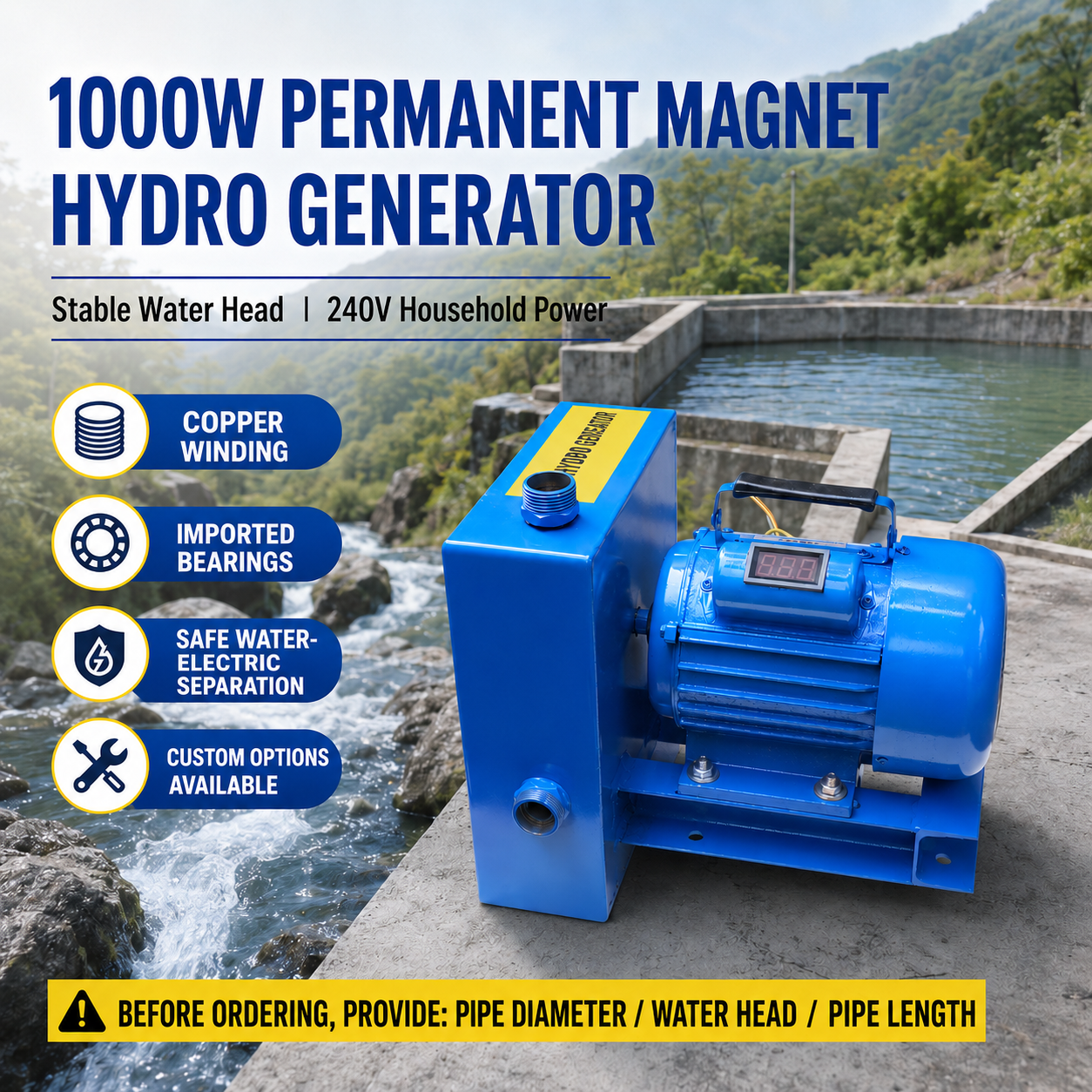
For light essential loads where measured water conditions support the output.
View product details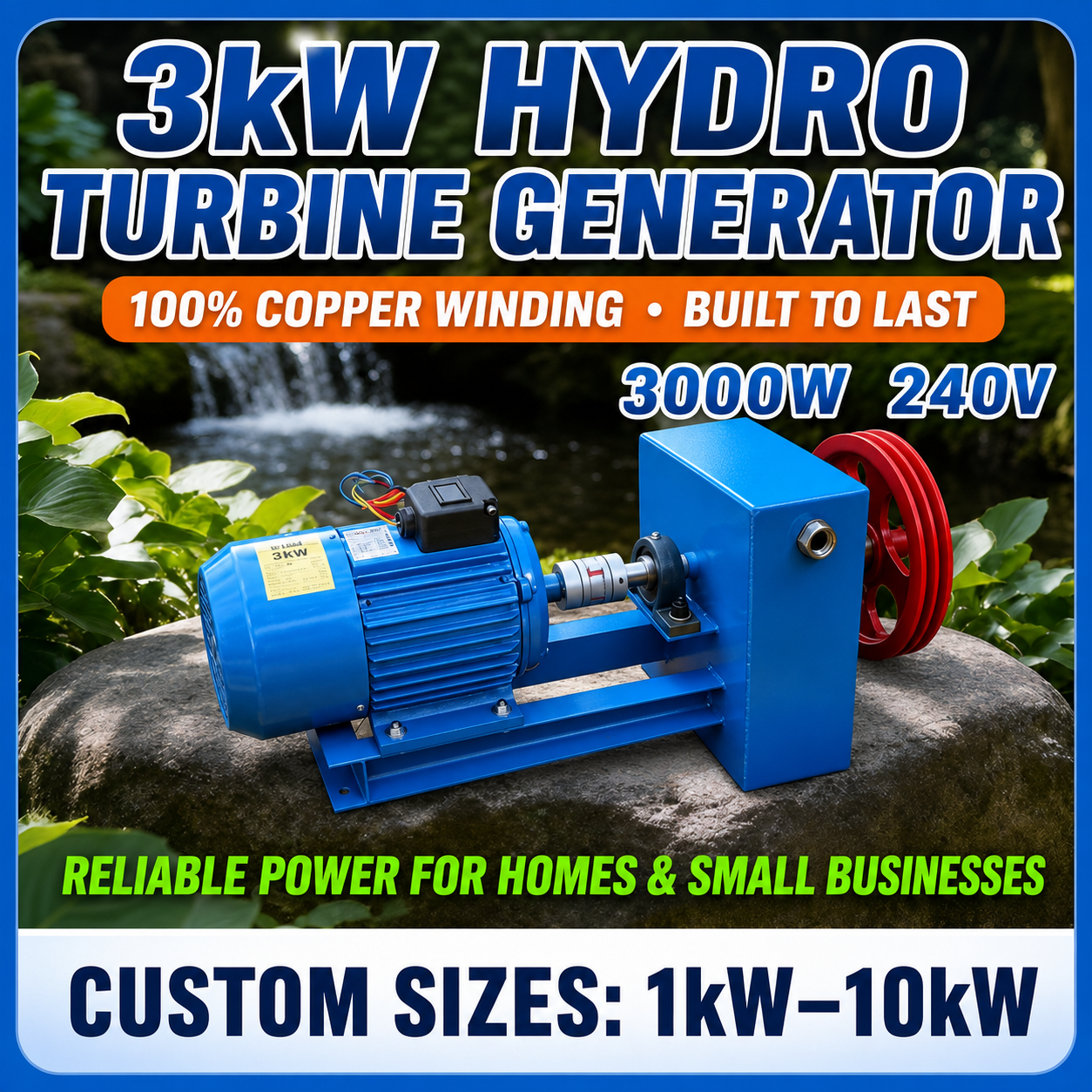
For larger useful loads, subject to sufficient head, dry-season flow and installation scope.
View product details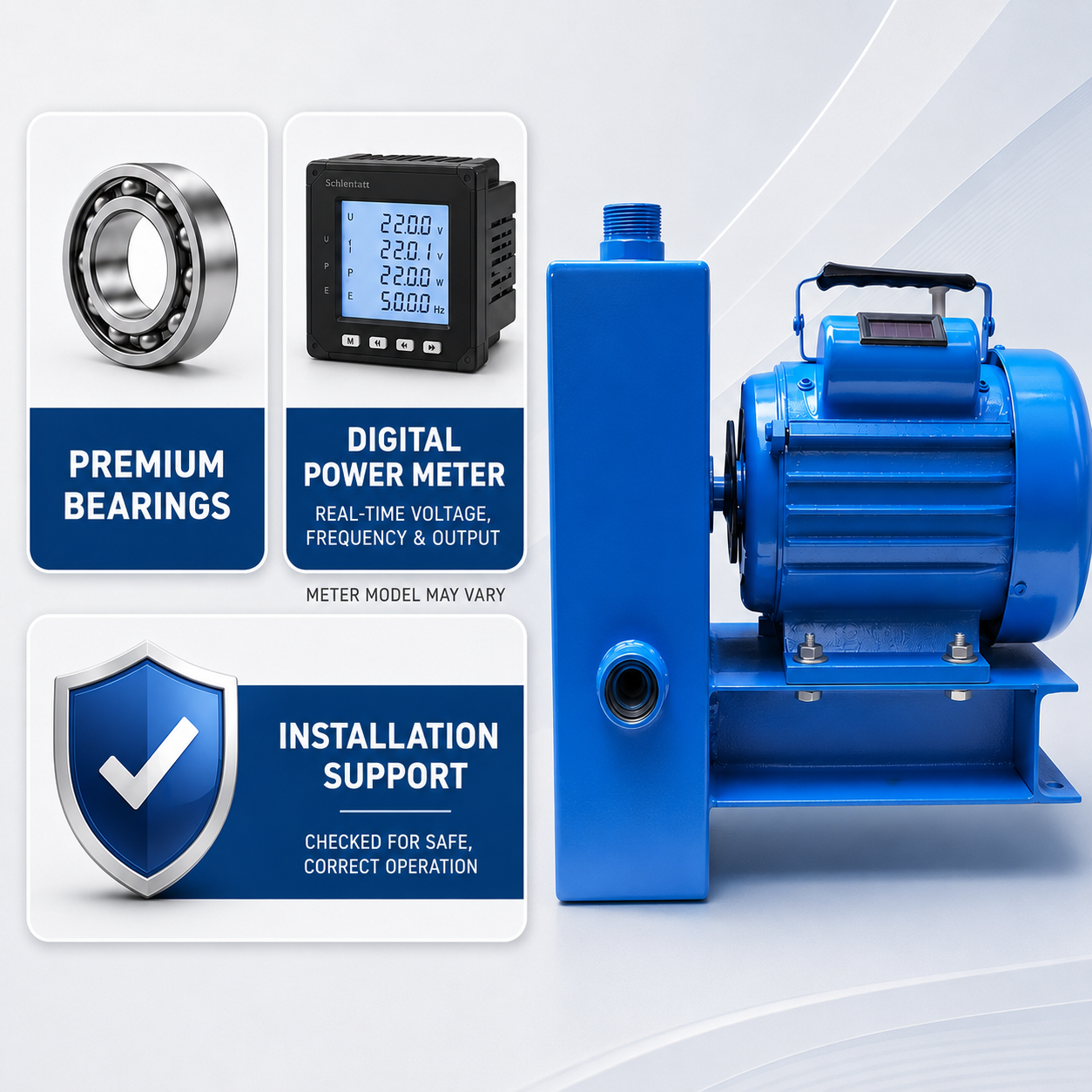
A configurable starting range for projects with measured water and documented electrical loads.
View product detailsCompare before committing
The best choice may be hydropower, solar and battery, a generator, or a hybrid. Compare the resource, operating time, civil works, service access and motor-starting needs.
| Option | Strongest when | Main limits | Typical role |
|---|---|---|---|
| Hydropower | Reliable head and dry-season flow exist | Site-specific civil works and water conditions | Long or continuous supply |
| Solar + battery | Good sun, quiet operation and daytime energy matter | Battery cost, night autonomy and motor starting | Daily household and essential loads |
| Generator | Fast backup and strong starting power are needed | Fuel, noise, ventilation and maintenance | Backup, tools, refrigeration and project loads |
| Hybrid | One source alone cannot cover reliability or seasons | More controls, design and installation complexity | Critical or resilient off-grid supply |
Before construction
Maintain safe downstream flow, manage erosion and silt, and plan for floods, debris and wet-season changes.
Confirm landowner, water-use and access agreements before buying project equipment or starting civil work.
Use qualified installation, proper earthing, breakers and cable sizing. Never connect to a public grid without authorised protection and approval.
Plan safe intake cleaning, spare parts, bearing checks, controller protection, weatherproofing and trained local responsibility.
Project path
Prepare a useful enquiry
Photos or short videos of the water source, intake route and proposed turbine area help us understand the project before discussing equipment.