
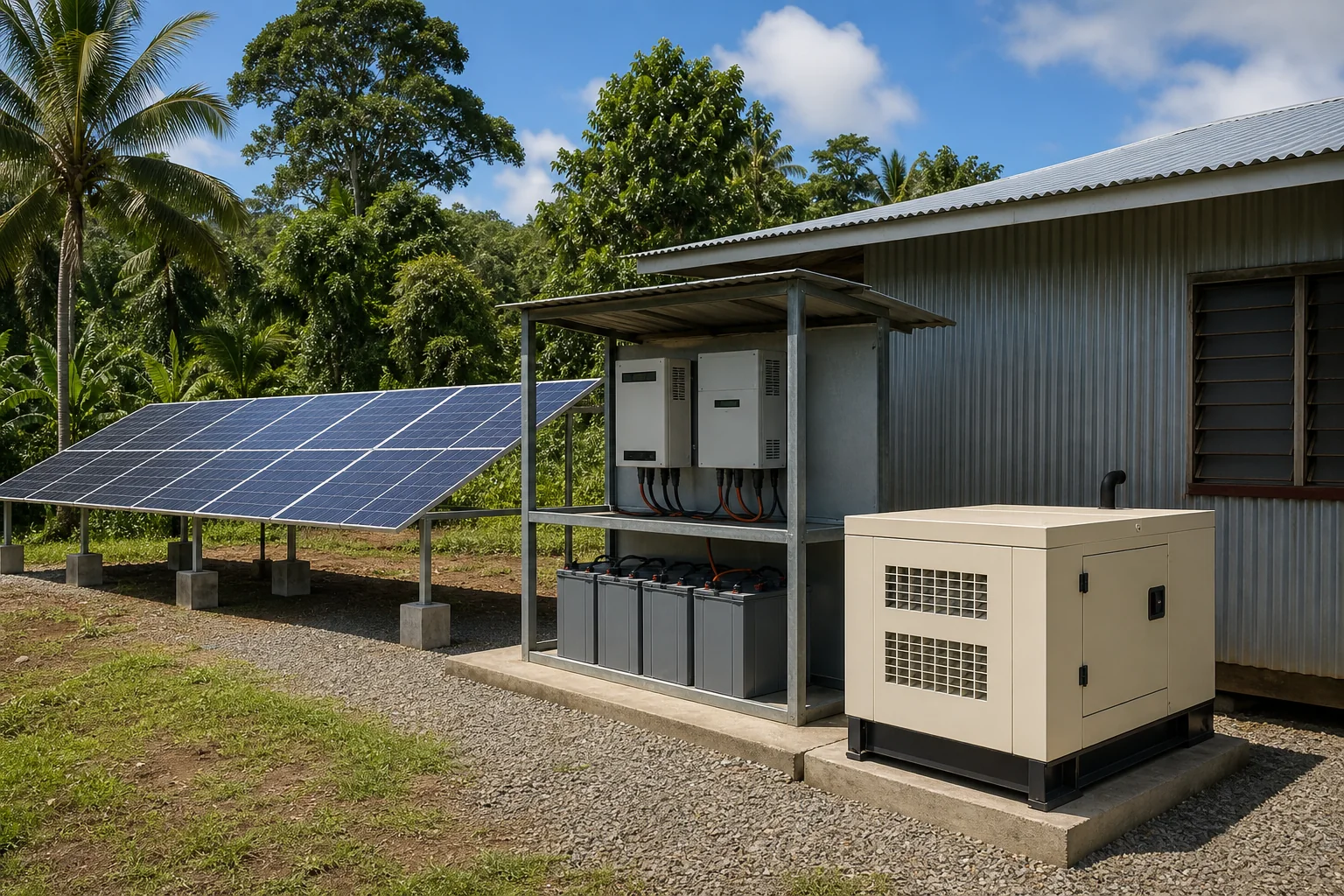
Environmental effects compared
| Condition | Possible effect | What to check |
|---|---|---|
| High altitude | Less oxygen can reduce combustion power and motor cooling. | Site elevation and engine derating curve. |
| High ambient temperature | Cooling margin and alternator current capacity can fall. | Maximum daytime temperature, airflow and radiator or fan data. |
| High humidity and rain | Condensation, corrosion, insulation contamination and blocked ventilation risk. | Weather protection without trapping exhaust or heat. |
Information needed before sizing
- Record town, province, approximate elevation and project location.
- Record the highest expected ambient temperature, not only the average.
- Describe enclosure, shade, ventilation, dust, rain and salt exposure.
- Provide load steps, operating hours and whether the unit is standby or daily power.
- Apply the manufacturer model-specific derating and cooling limits.
Common mistakes
- Using sea-level catalogue output for a highland site without checking.
- Putting a generator in a tight box to keep rain out.
- Blocking hot-air discharge so the machine recirculates its own heat.
- Applying a generic percentage from another engine model.
- Ignoring dust, corrosion and maintenance access.
Safety note
Suitable products
Highland, coastal and long-running project sites may require different generator margins, cooling arrangements and service plans even when the electrical load is identical.
Need help with your actual equipment?
Send the equipment nameplates, your location and the loads that must run together.