
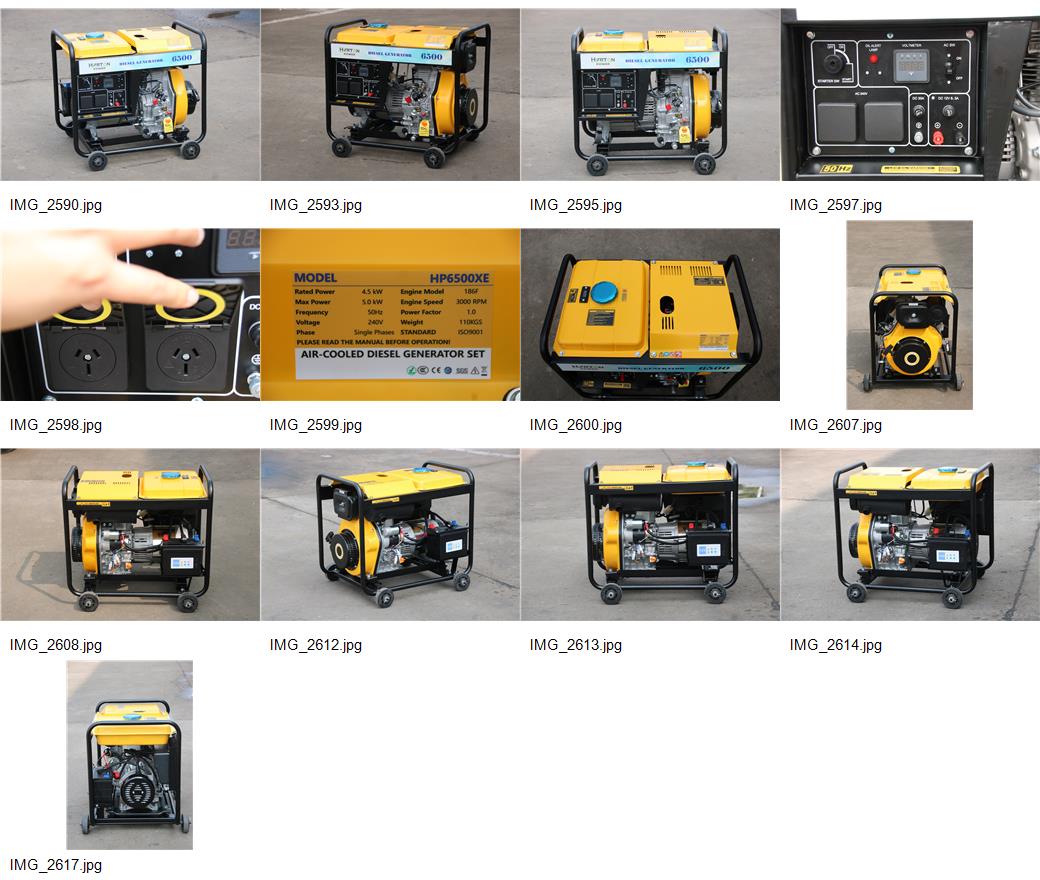
Comparison chart
| Term | What it means | Use it to check |
|---|---|---|
| kW | Real power that performs useful work and loads the engine. | Heating, lighting, mechanical output and fuel demand. |
| kVA | Apparent power carried by voltage and current. | Alternator, cable, breaker and motor-starting capacity. |
| Power factor | The ratio between kW and kVA for the load. | How efficiently apparent power becomes useful real power. |
Example: 5kVA at 0.8 power factor equals about 4kW. A resistive heater may operate near power factor 1, while motors and transformers commonly operate below 1.
How to use the figures when choosing
- List the running kW and starting requirement of every load.
- Read voltage, phase, frequency, current and power factor from each nameplate.
- Check both engine kW capability and alternator kVA capability.
- Allow for motor starting, nonlinear loads and the operating duty.
- Confirm the final selection with the generator data sheet or a qualified person.
Common mistakes
- Treating kW and kVA as identical in every application.
- Using the generator's assumed 0.8 rating factor as the actual power factor of every load.
- Ignoring phase and current when comparing two labels.
- Adding only running watts and forgetting starting kVA.
- Using a model number as if it were a certified output rating.
Safety note
Suitable products
Use these checks for portable generators, three-phase project sets, pumps, refrigeration and other motor loads.
Need help with your actual equipment?
Send the equipment nameplates, your location and the loads that must run together.